 Game with Us
In 2024 I spent a year pitching publishers for It Was You. We reached out to 28 of them, got meetings with about half, had dozens of meetings across those, received a handful of term sheets, and in the end, zero signings. This is the story of how that happened, what we learned, and why we're still here.
Why I quit my day job
I was working at Amazon Games when my project was shut down. I had been working on marketing pages for titles like New World and Lost Ark, and the new plan for me was to move into tax and accounting automation for Amazon Games. That was a death sentence for a creative like me. I actually envied the people in my org who got laid off and received severance.
I voluntarily quit.
I could only make that choice because I have a very supportive partner who was willing to be the primary income earner at home. I want to say that upfront because it's easy to make quitting your job sound heroic. It wasn't. It was a privileged choice built on a strong relationship and a shared belief in me. Not every founder gets that runway, and I'm grateful every day for mine.
All along the way I had been moonlighting on It Was You. We had a playable game. It felt like the right moment to push hard and find a publisher who could take us the rest of the way.
Why we wanted a publisher
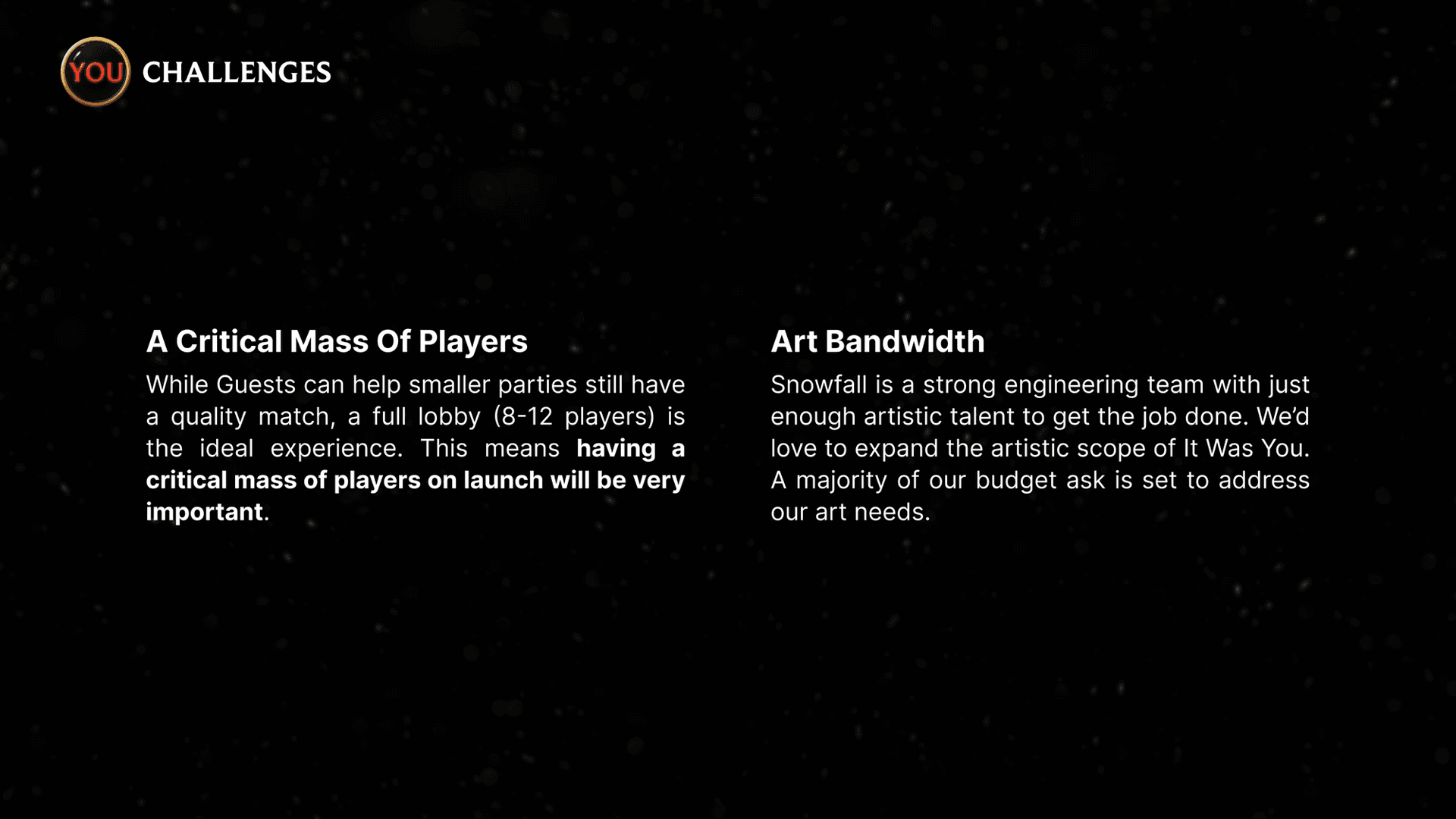
The honest answer is development funding for art, aka putting Austin fulltime.
Austin is our art director. Believe it or not, he's also a software developer by day. (Incredibly talented. I don't know anyone else who can both code, and create beautiful art for a game.) He wasn't in a position to leave his day job, and the art side of It Was You was constantly stretched thin. A publishing deal meant we could bring Austin full-time and push the visuals where they needed to be. That was the dream.
Getting ready
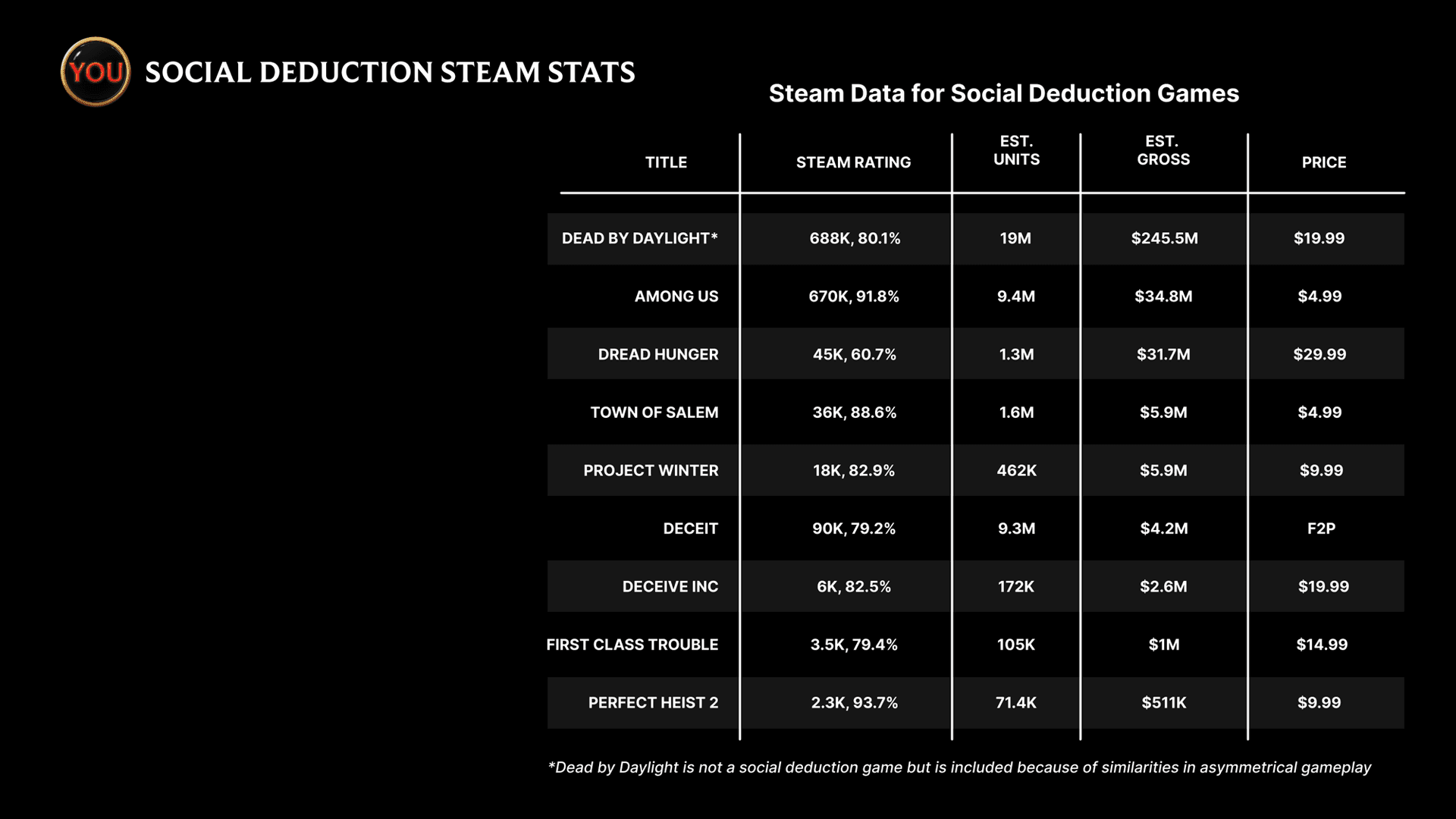
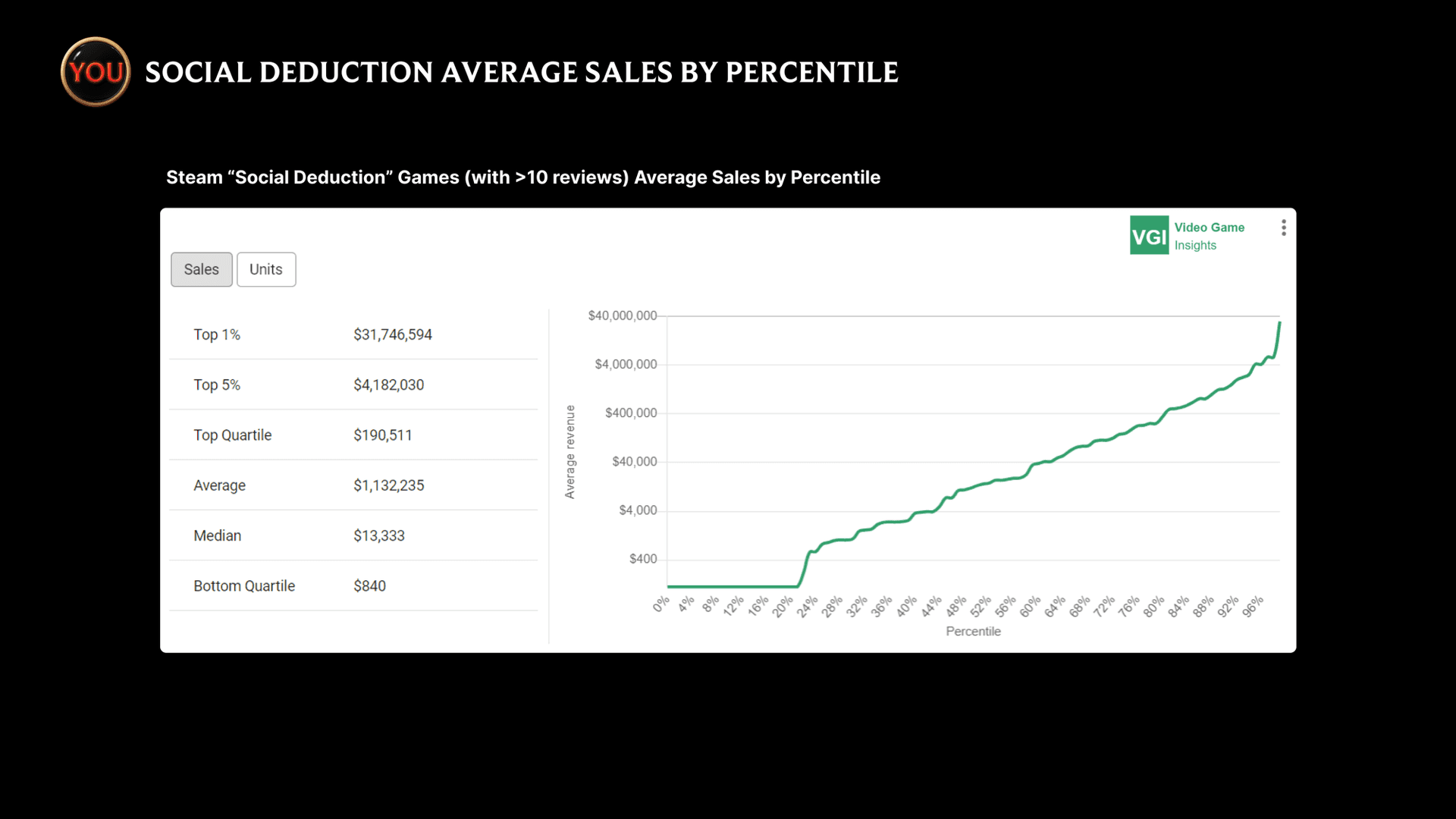
I spent a lot of time on the pitch deck. The game side was obvious, but I also leaned into my entrepreneurial background and built out market research, financial projections, and a business case.
Publishers do their own research, but we got a lot of compliments for showing up with more than just a game. Publishers want to see that you've thought about the business of your game. Who are your players? What is the market opportunity (e.g. can you name similar games and how many units they sold). The data is out there.
Finding publishers
A few things that actually worked:
The r/gamedev publisher spreadsheet was a great starting list. Some cold outreach worked too, more than I expected. But the best conversations by far came from warm introductions.
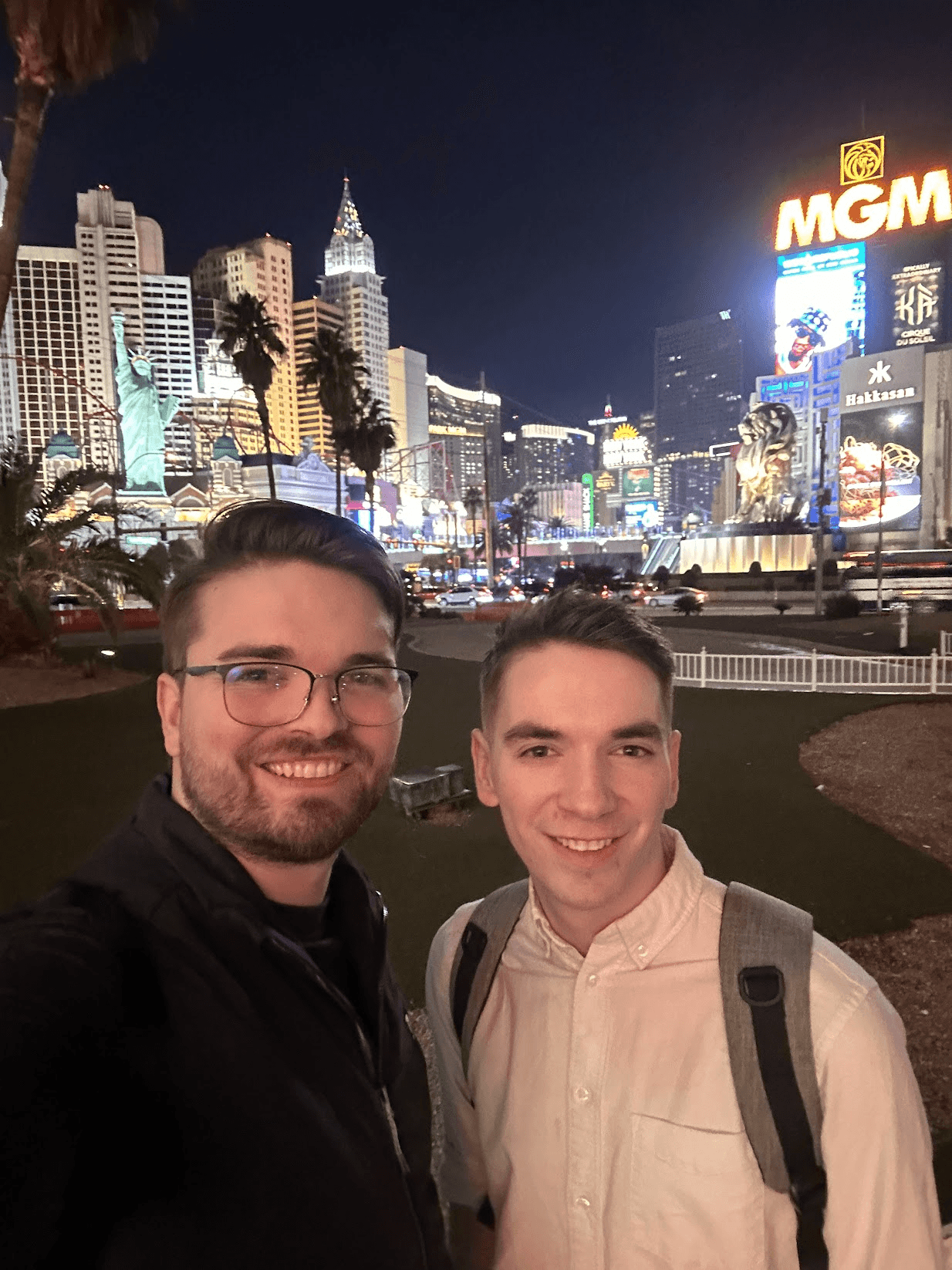
One mentor told me to go to DICE and just hang out in the ARIA casino, outside of the main stage. You don't even need a conference pass to be there. I went and walked up to strangers and awkwardly introduced myself. Most people were incredibly welcoming. I still cringe to this day at how often my sentences would come out backwards due to my nerves. I could feel myself improving each time though, and it got easier. I dare say I might even be good at this cold-intro pitching thing now.
My brother Tanner came with me. He was an early Snowfall software engineer and instrumental in the early days, and he stayed by my side for company and dinner after a long day of pitching. Having him there made the whole thing less lonely.
I also did Meet2Match, which gave me structured meetings with publishers and game scouts. DICE and Meet2Match are where I connected with ep1t0me, and we partnered with them as our publisher-finding agents. They opened a lot of doors that would've stayed closed otherwise. I still intend to continue working with them when it makes sense. Great people!
Relationships are everything. I cannot stress that enough. Ep1t0me has spent years building and maintaining them, and that turned into real conversations for us.
The numbers
We reached out to 28 publishers in total. About half of them agreed to a meeting, and from there some turned into long multi-month conversations with many follow-ups. By the end I had done dozens of calls.
The biggest thing I learned was that a fit has to work on both sides on a lot of dimensions. Some publishers only want single-player games. Some have a specific budget band. Some only want horror. I've had publishers stop me mid-pitch because they didn't know we were multiplayer until slide 5, and it wasn't caught beforehand. It happens! It can be a really good thing to ask upfront what they are looking for.
The standard advice is "reach out to everyone", which is still good advice. But you also need to nail down your top five best-fit publishers and work hard to get warm intros to those specifically and cater the pitch to them. At one point we even reworked the IP theme of It Was You to extend the world of one of a publisher's existing IPs. It wasn't a good fit in the end, but they loved the effort. We continued conversation with our IP standalone after that.
This is a creative industry and being creative in pitching works. Waddayaknow!
How pitches usually went
Most pitches followed roughly the same shape: an intro call where I'd run through the verbal pitch, then I'd either schedule a playtest or send them a build to play on their own. Good publishers would come back with actually valuable feedback. A few of them taught us things about our own game we hadn't seen.
There's no hard rule for term sheets, though. We had one publisher send us a term sheet before they had even played the game. (That was a red flag, and I'll get to that one.) We also had ten-plus meetings with some publishers and never got to a term sheet. Every publisher runs their own process.
The best single thing I learned from all this: ask about their process. Ask where you are in it. Ask what the acceptance criteria is to move to the next step. Then go deliver it on a silver platter. "Make their job easy" was our motto. Most of the time we were working with game scouts internally, and we just wanted to arm them with everything they needed to walk into a room and tell their boss how awesome our game and our team were. That worked.
The pattern we started noticing
A lot of our conversations would progress really well, and then suddenly turn ice cold. We'd ask for feedback and not get much back. This was a little unsettling and then it started happening in a pattern.
In the weeks following a sudden freeze, that same publisher would announce layoffs. The empty feedback was suddenly explained as many couldn't risk news of layoffs getting out beforehand. It wasn't us, it was an industry in freefall. That was hard to internalize because there's no way to know in the moment whether the silence means "you're not a fit" or "we're about to let half our team go."
One publisher was just upfront about it. They said they'd love to sign us, but they weren't in a position to, and doing so would put them in a tight spot, which would then put us in a tight spot. I appreciated that honesty more than they probably know.
It's 2026 and unfortunately it still feels like we're in freefall...
The brutal term sheet
We received a few term sheets. One of them was rough enough that I want to just show you the numbers.
The revenue split they wanted was:
- 90/10 in their favor until they recouped 1x their development funding
- 80/20 until 2x
- 70/30 until 3x
- 50/50 in perpetuity after that
Translation: they wanted the majority of revenue until they'd made back three times what they put in, and then we'd "split evenly" forever. This is the same publisher that sent us a term sheet without ever playing the game.
It was enlightening. We turned it down.
I'm not going to name names here, it's just professionalism. But I will say this: the rough games climate gave publishers a lot of leverage to offer terms like this to developers who didn't have the ability to walk away. We were lucky enough to be able to walk away. A lot of studios aren't.
The team during all this
When I was at DICE and needed some specific asset to show to a publisher the next day, people would stay up late to get it done. I could always rely on them, and I felt like they relied on me. The opening doors for a novice team and new studio like ours was exciting.
None of us on our team had pitched publishers directly and it was fun to be on that journey together. I think we all grew a lot from the experience.
How it ended
All of our threads dried up. We chased every conversation to the end, asked for every piece of feedback we could get, and eventually there just wasn't another door to knock on. There was no single dramatic moment where we decided to stop. We just ran out of publishers.
At that point the only options were to keep waiting for the industry to recover, or to get creative. That's what led us to UEFN and our current situation.
What I'd pass to another indie
If you're thinking about chasing a publisher here is my general advice:
- Don't be afraid to cold intro. I know its hard to believe, but it can work.
- When someone responds, build a relationship.
- Ask nicely if they can open doors. Most people genuinely want to help.
- Make their job easy. Ask about their process, deliver exactly what they need.
- Show up with the business side, not just a game.
- Nail your top 5 best-fit publishers. Reach out to everyone, but really work those five. Come with ammunition as to why your game and team is THE BEST.
- Have a playable build. And only work with the publishers who play it and can deliver real feedback.
And the big one: the games industry is small and full of people who want to cheer you on. Talented people want to work with other talented people. If you approach this with humility and curiosity, you'll end up in a lot more rooms than you expected.
Would I do it again?
Absolutely. It made our game and studio better at what we do. I learned SO much through the entire process. I will admit, though, it does make me quite tired thinking about doing it again.
For now, self-publishing is the plan for Snowfall. We'll still work with the right publisher if one shows up and it genuinely fits, but being able to say no is our superpower. That was the real lesson of 2024 for me. Not "publishers are bad". Not "pitching is a waste of time". Being in a position to walk away is worth more than almost any deal. Overall, when the deal is right, and the relationship is right, I think publishers can be a great thing for indies.
If the industry wasn't in such a tight place right now, I honestly think It Was You would have been funded and released by then. We sure had fun playtesting it with all those publishers out there.
It Was You will eventually find its way, because we persist!
Onwards,
Jaden
 nanostorm
Get the next dev blog in your inbox
We send a quick note when we post. No spam.
