 Game with Us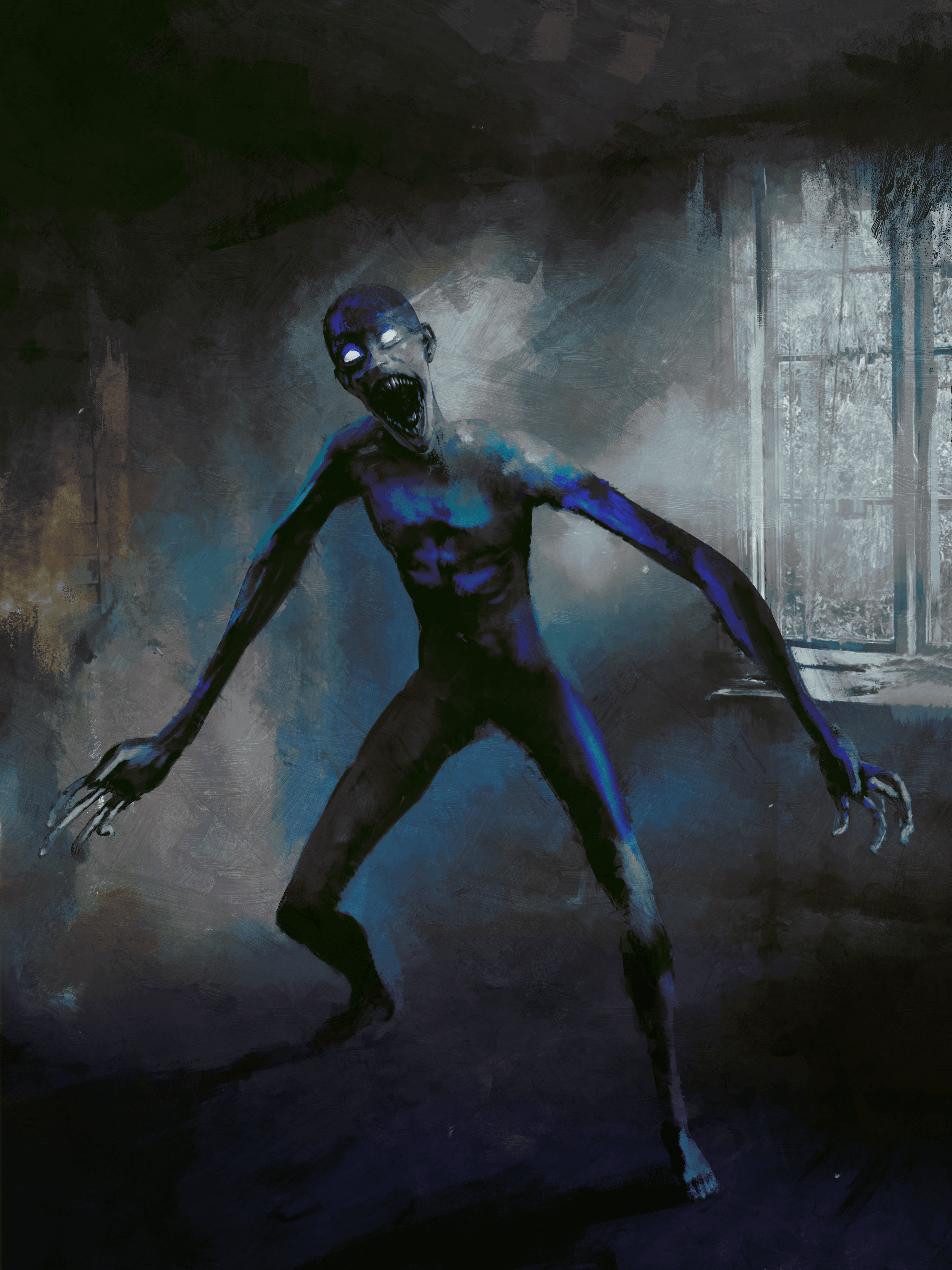
This is a peak behind the curtain, finding out what goes into creating a new card. We'll go from initial concept to implementation and fixing it after playtesting. Come find out a little bit of what goes into making a cryptid real.
My name is Matt. I'm one of the engineers working to make this game the best it can be and the team's game designer, responsible for many of the core mechanics. Most importantly though, I work on making the cards and this post is highlighting some of what goes into creating those cards.
Starting with the lore
Any good design has to have a good foundation. I try to make sure the cryptids we pick are sampled from around the world. A little bit from Asia, Africa, the Americas, and all around the world. That being said, it is easy to forget the other frontier, internet urban legends. The Rake is a thin humanoid with glowing eyes and razor sharp teeth. It likes to creep into houses, watch for a moment, then suddenly attack with terrifying speed. Very creepy, very sudden, and a great concept. The only small issue is that's it. There is very little to work off. No details about where it's from, why it's there, or what it does before and after an encounter. There is not even any details about a particular area it is confined to apart from sporadic reports in various US cities. Nevertheless, it is still something to start with, an attack pattern and behavior that we can really focus on. The method of a strange wait followed by a vicious and unrelenting attack sounds like a fun pattern to use in a game.
Turning a stare into a stat
That strange wait and a sudden attack turned into the core mechanics behind the card. The key concepts were:
- Delay at the start
- Obvious indicator of approaching trigger
- Big, worthwhile payoff
To that end, we got the Rake.
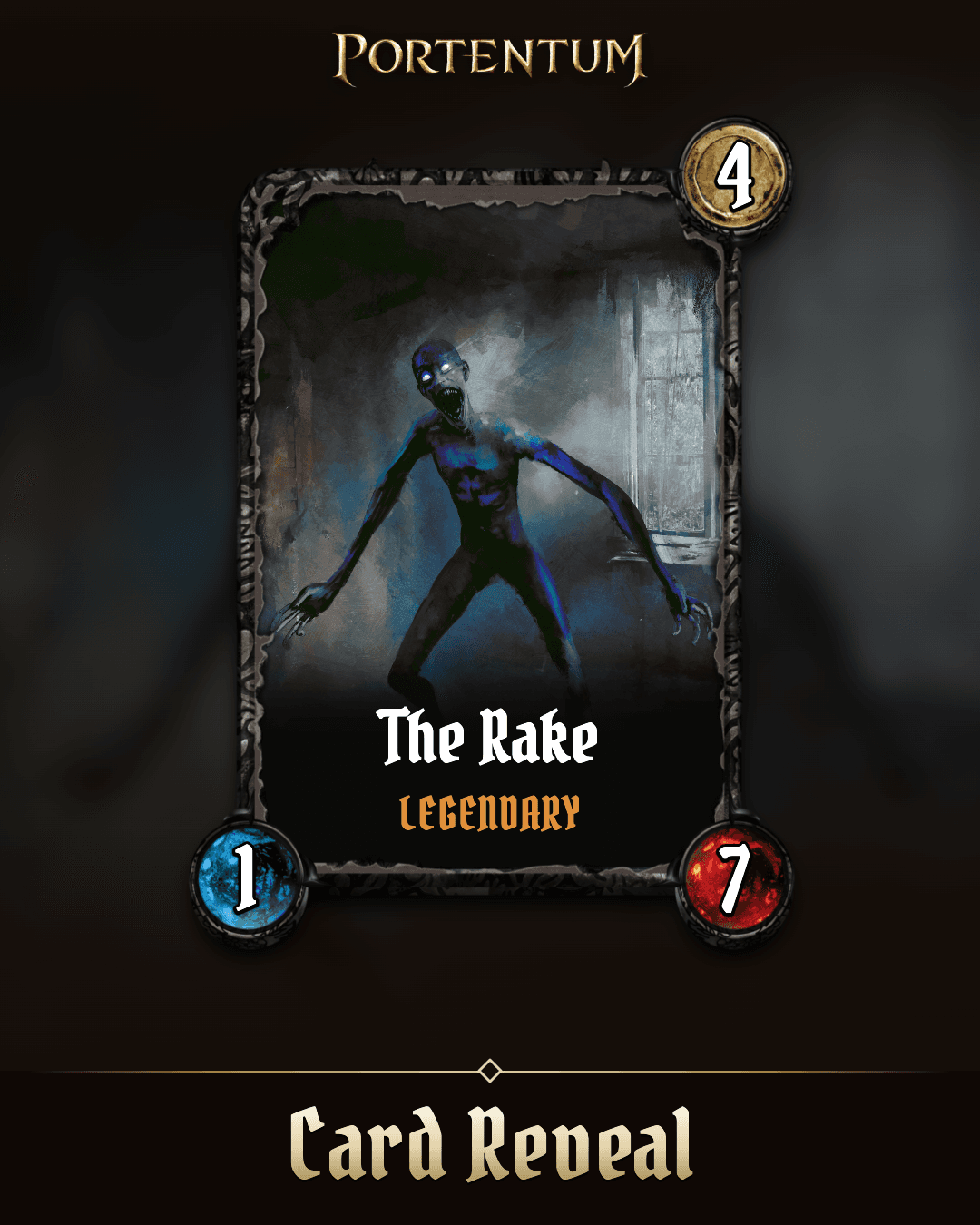
First, the most important concept to understand is Threat. It decides which card acts first on a roll and which card gets targeted first. It's very important for this card in particular because we want to use that feature to create tension. Creating that moment for a player where they see a big inflection point that's being worked towards and having the question answered of: Is the payoff going to get here fast enough?
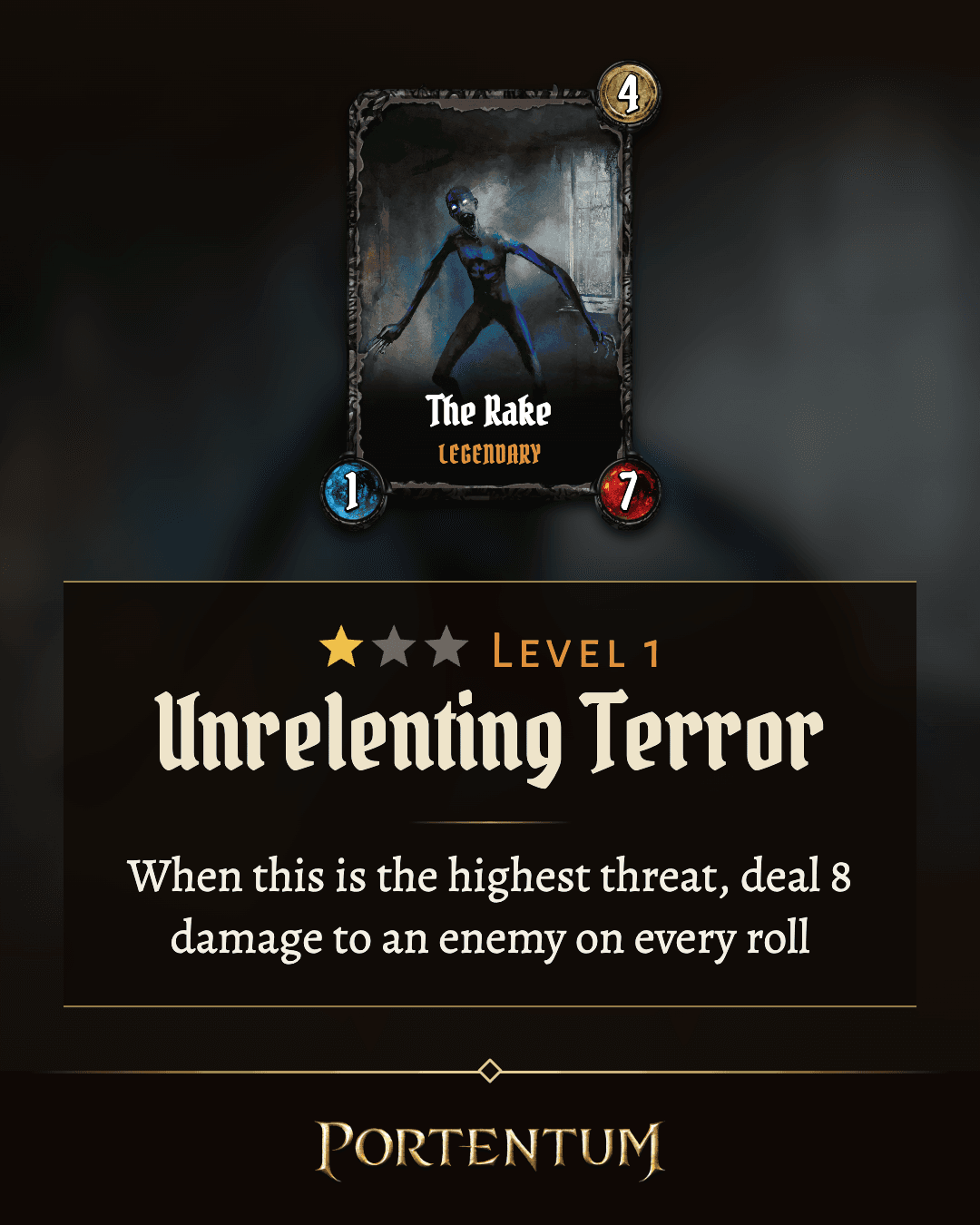
The second ability Unrelenting Terror is that big payoff. It gets to do a ton of damage every turn and become a huge problem for the enemy warband all on its own. Since it will be the highest threat when it attacks, it always attacks first and has the potential to finish off opponents before they get their actions to fire. If that was all it did, it would be very overpowered but we can gate it behind its first ability.
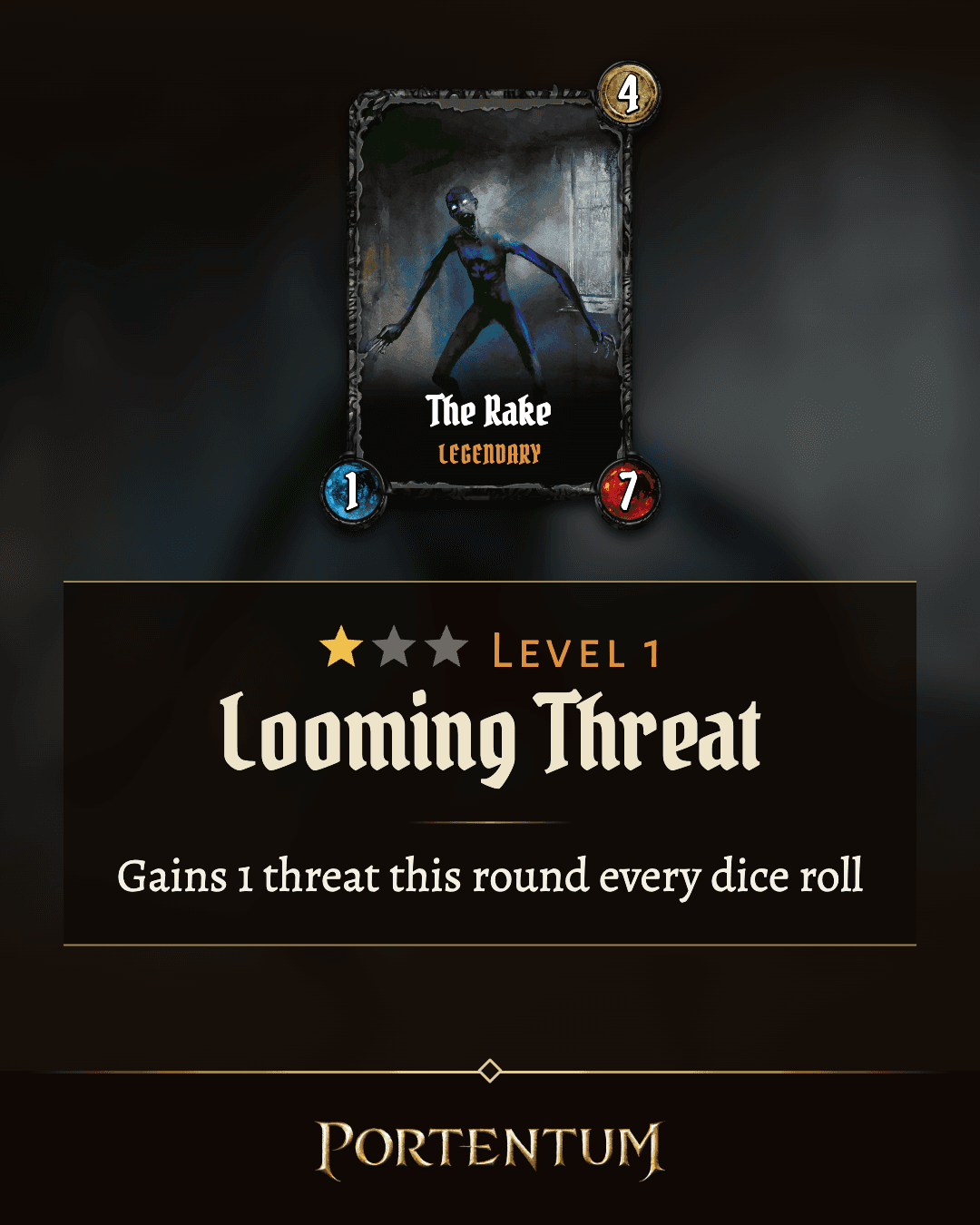
Looming Threat is what best ties it to the lore. It starts out with low threat and is unassuming. It builds up over time where everyone can see it will become unleashed soon, a delayed firecracker waiting to go off. Literally, once it is the most threatening card around, it attacks again and again until the battle is over.
The archetype it created

The Rake created a spot to pour the existing cards that manipulated the threat stat into a new home. Cards like the Grimalkin or Odd Emanating Crystal help focus on ramping the Rake up in a new way that it can uniquely benefit. Especially in this case, I love how it creates new niche synergies between pairs of cards. It really clicked into place some cards that didn't have a specific archetype yet and pushed them into a better light where they can work as a core piece of a 5-card warband. The less obvious synergy is a spot for large, targeted healing cards like Quetzalcoatl. It has to stay alive as long as possible and with a large health pool, this card can make the difference where otherwise it would not get its full potential.
What the engine had to learn
It seems basic but until this point we never needed a way to poll the stats of the other cards in a battle and find the outliers. Searches for the highest health or most injured just didn't exist. The Rake required that change and was the direct reason we were able to use the new searches for other unrelated cards. They got to target cards under new criteria such as lowest threat and have the Rake to thank for it even if the only connection is all under the hood.
For the Rake specifically, we needed to make sure its attack only worked when it was the highest threat of any card in the battle. That preserved the delayed reward aspect which made the design its most flavorful and created one more new way to fashion a deck around a different idea.
What playtesting showed
The hardest part of this card was balancing the razor's edge. Tuned too weak and it becomes unplayed. Too strong and it takes over entirely. Especially with just the in-house devs testing it every week, it becomes quickly apparent when something is too strong because you start to see it in every other match. Starting health and threat varied a bit until it was locked in eventually but the true constant was always its price.
In order for it to be a staple of its own archetype, it needed to be a cheap cost to make sure it could be bought first. There is no point in buying a bunch of support cards when the core engine isn't even available yet. Ideally, it should always be available in the first couple of rounds and allow players to build up support around it afterwards.
How you beat it
The best cards always have a counter to them and dedicated readers of the blog deserve a small edge by getting this far. The most important part to remember about the Rake is its threat. That sounds obvious but the side effect is that it will always be first targeted so any single-target lockdown effect will be immensely powerful against it. Freeze or Petrify are the best effects to use when fighting it so make sure to stock up on one or both!
Roll well,
Matt
Get the next dev blog in your inbox
We send a quick note when we post. No spam.
